

musings/notes
or, confessions of a drama queen

Zora! Festival Academic Conference Vlog
spend 3 days with me in Orlando/Eatonville/Maitland celebrating big Zor Zor, the illustrious Zora Neale Hurston
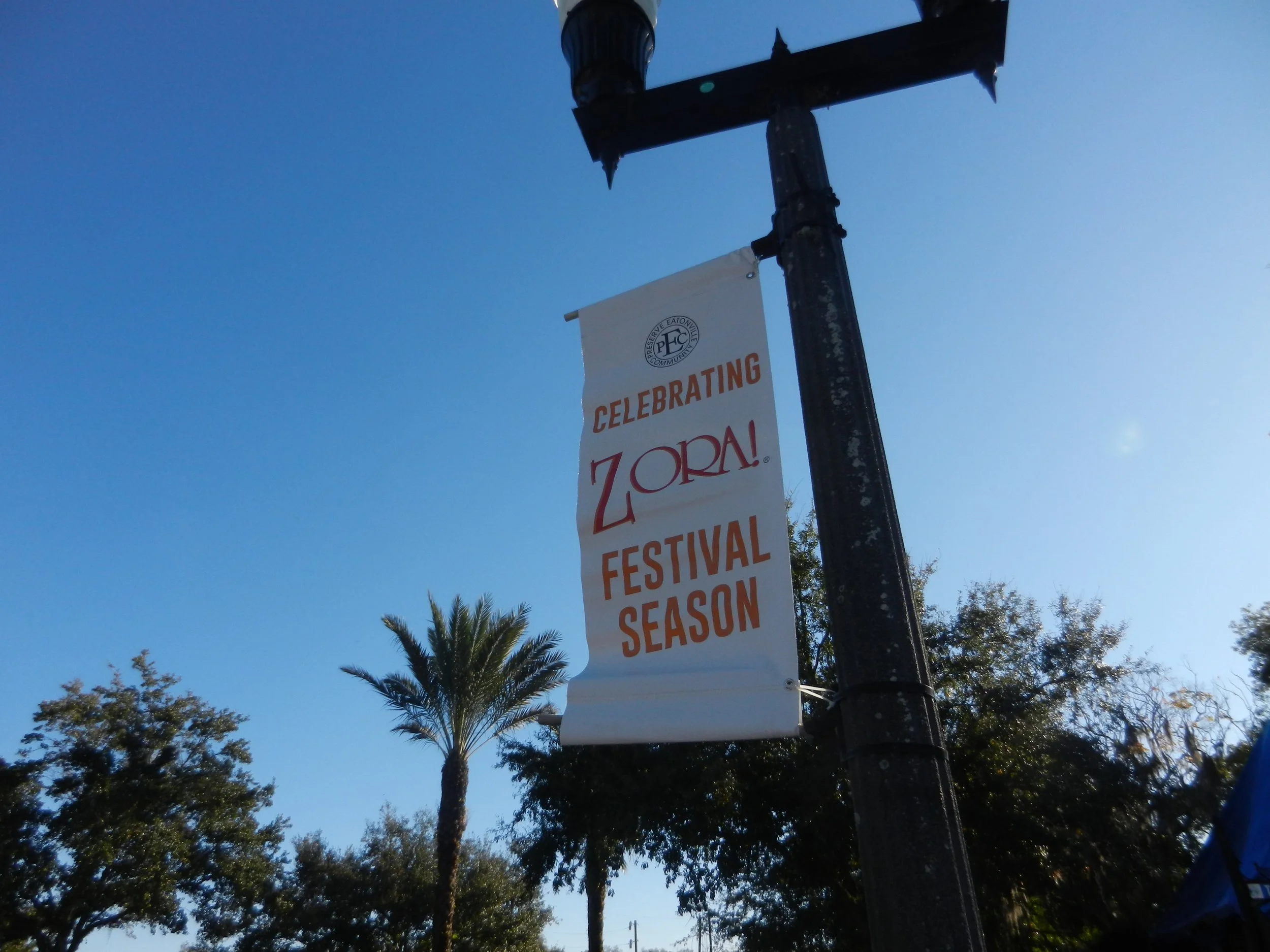
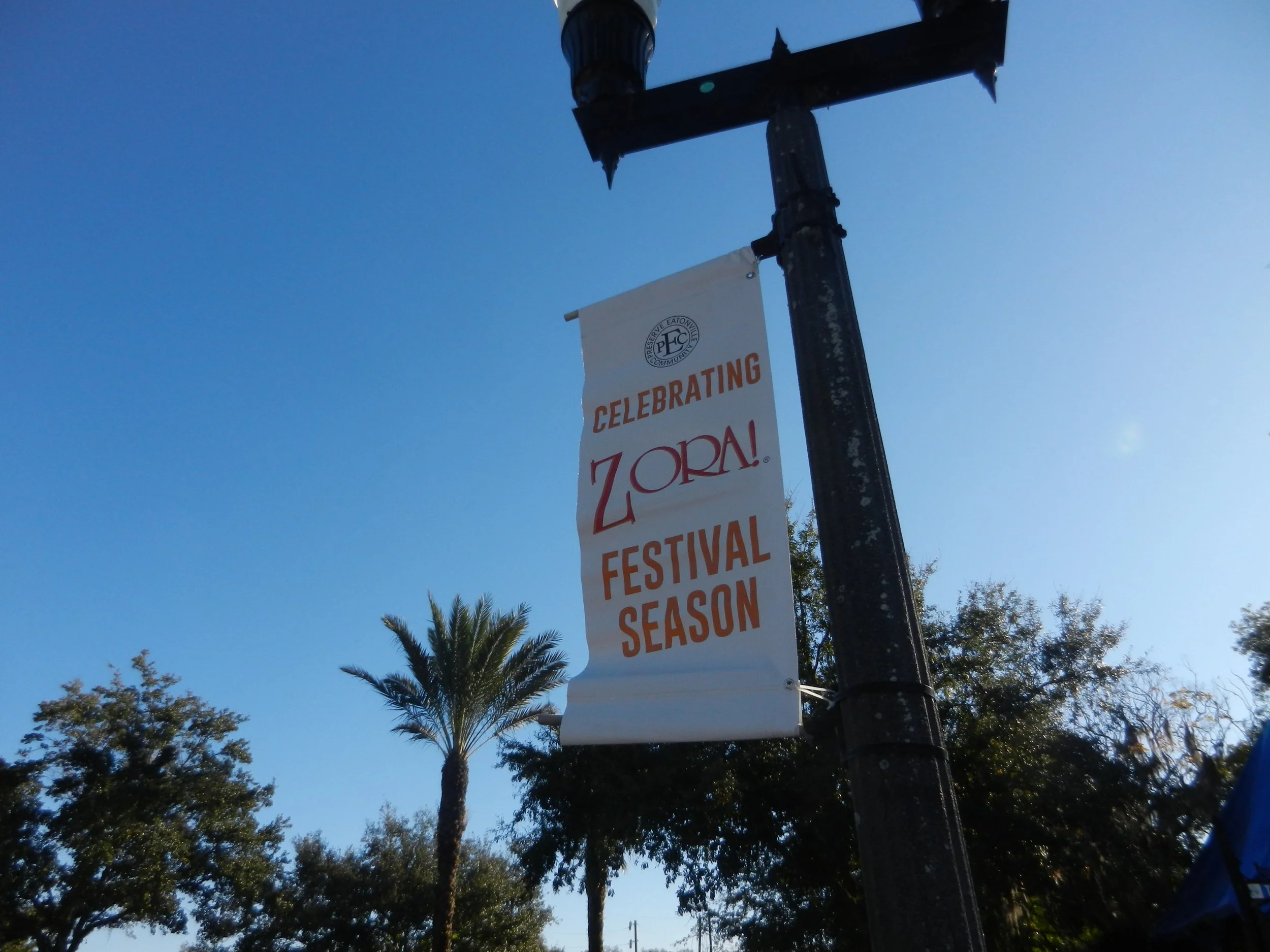
“As the grimy globe spins”: Zora Neale Hurston, Care, and Making a Place
Day 1
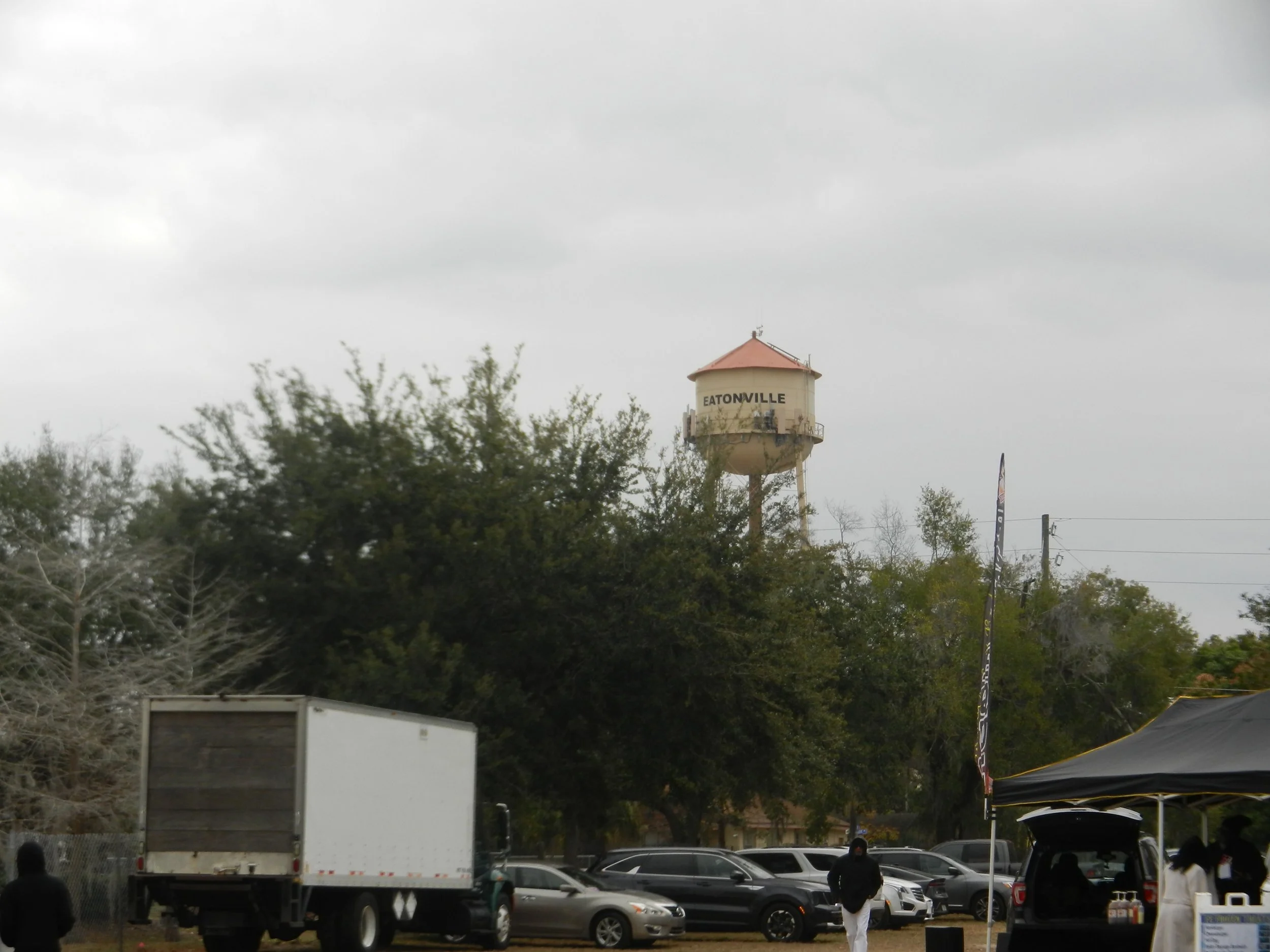
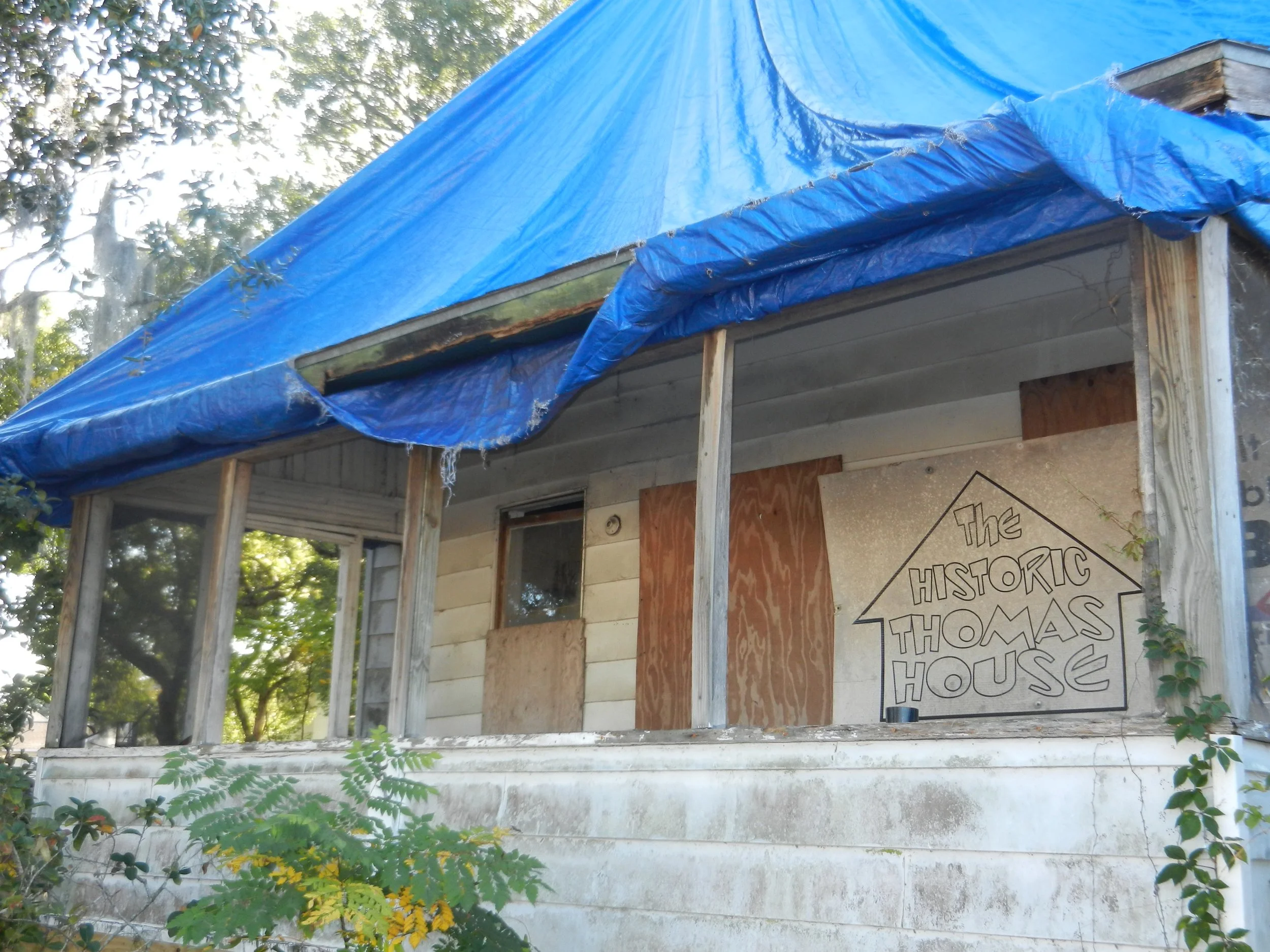
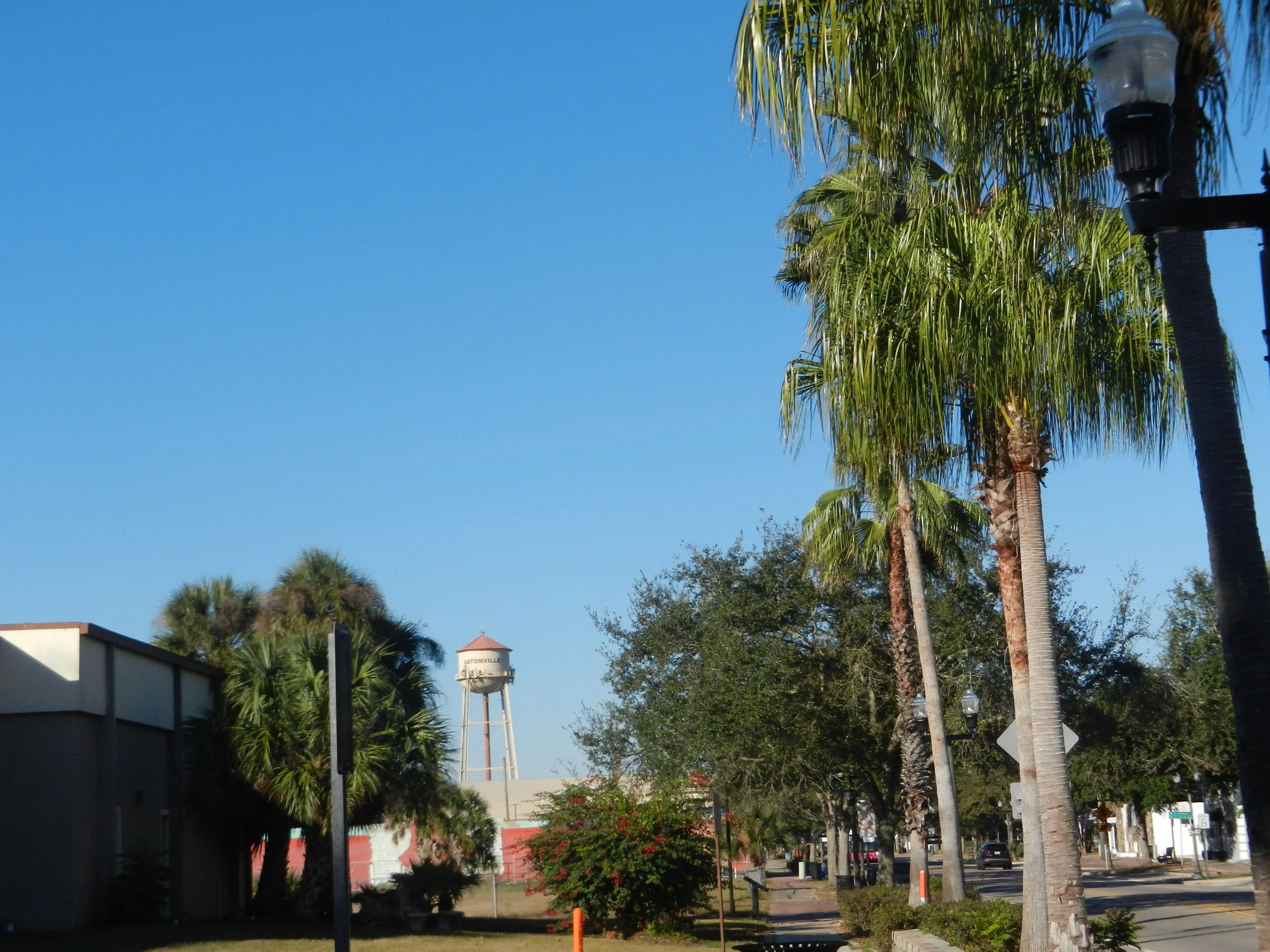
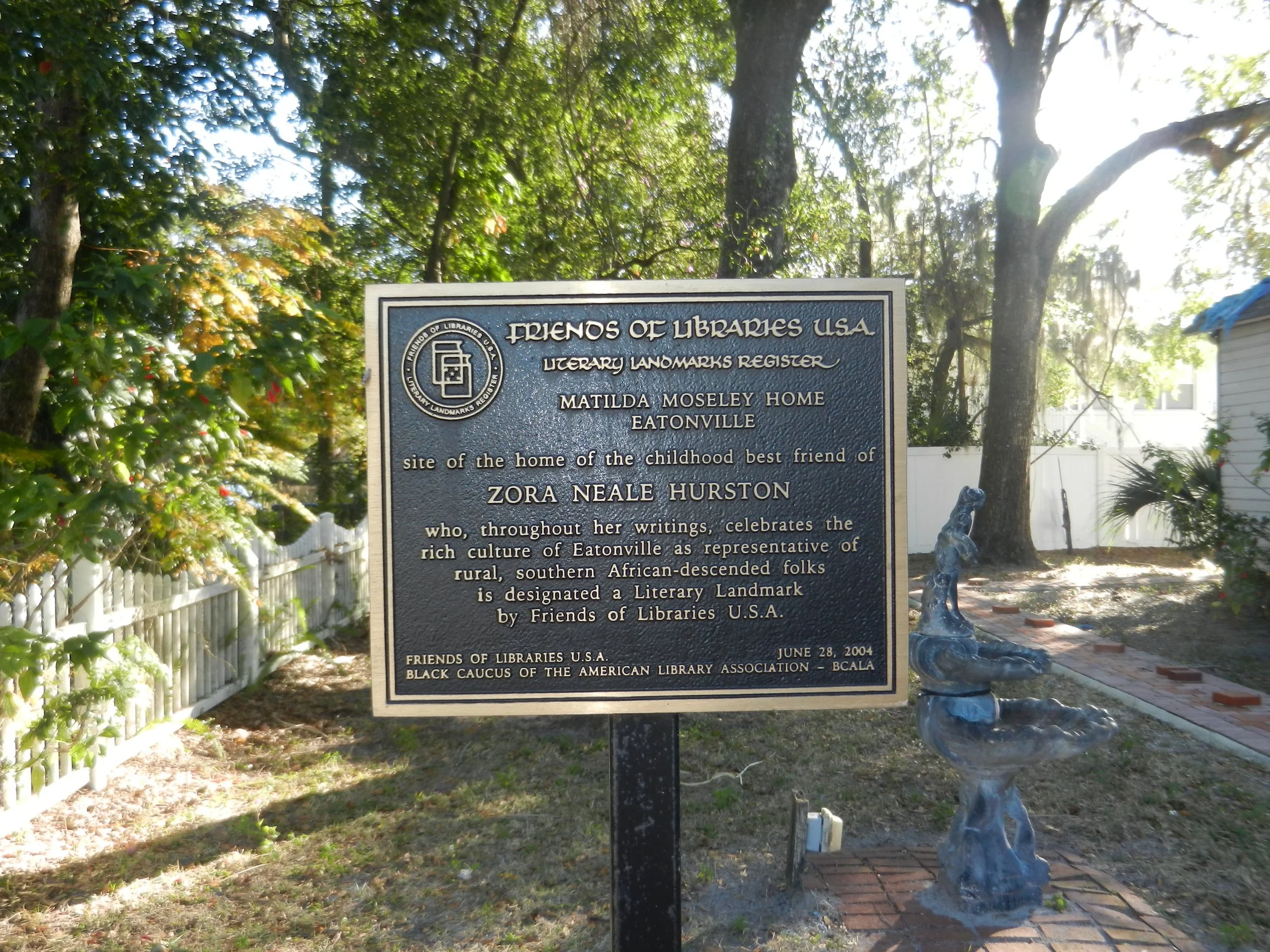
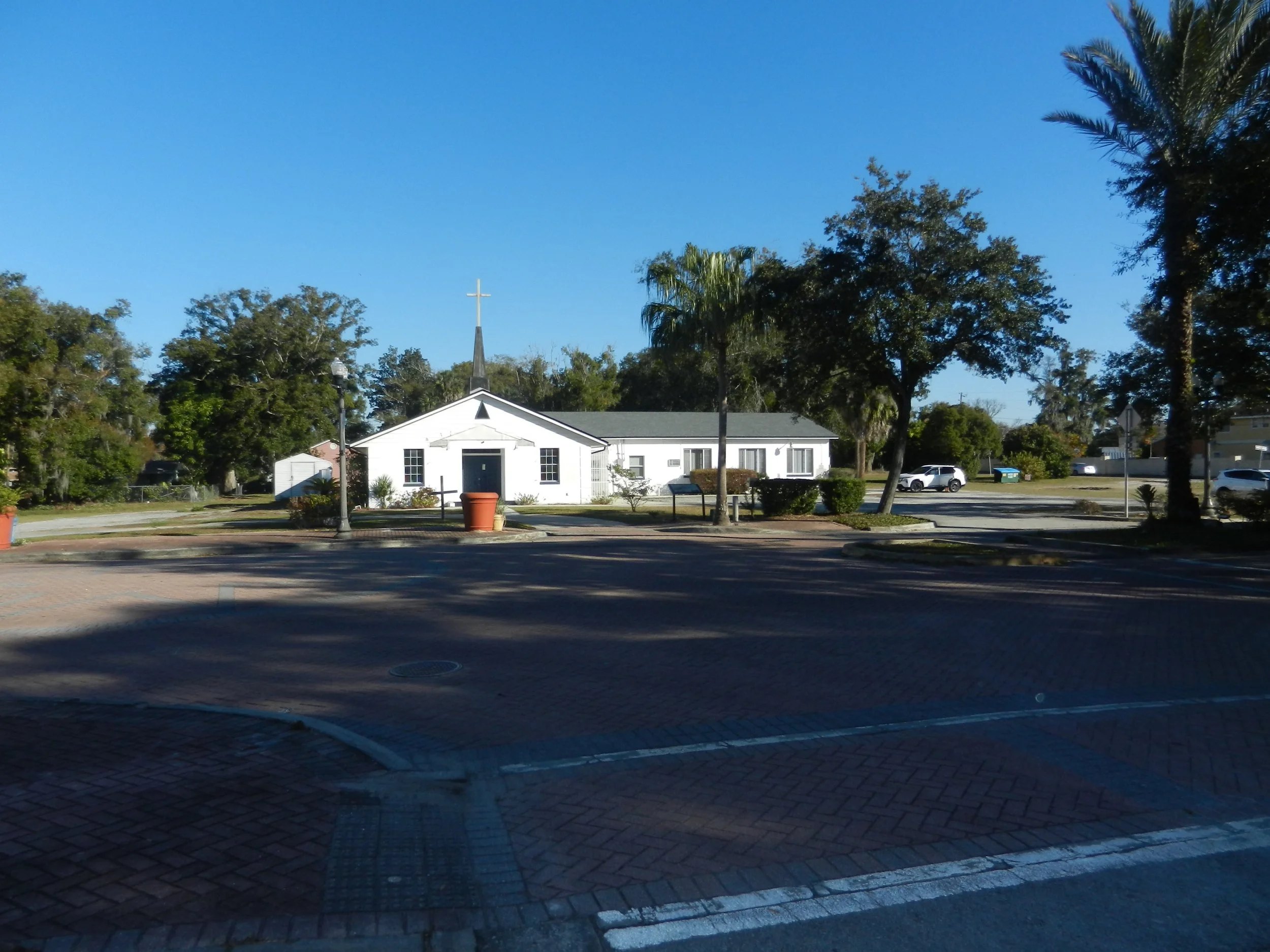
I originally had not planned on taking the tour of Eatonville because I imagined it to be much like the place my father grew up. To my surprise, it was even smaller. Roanoke Rapids has a Walmart. Eatonville has a Family Dollar.
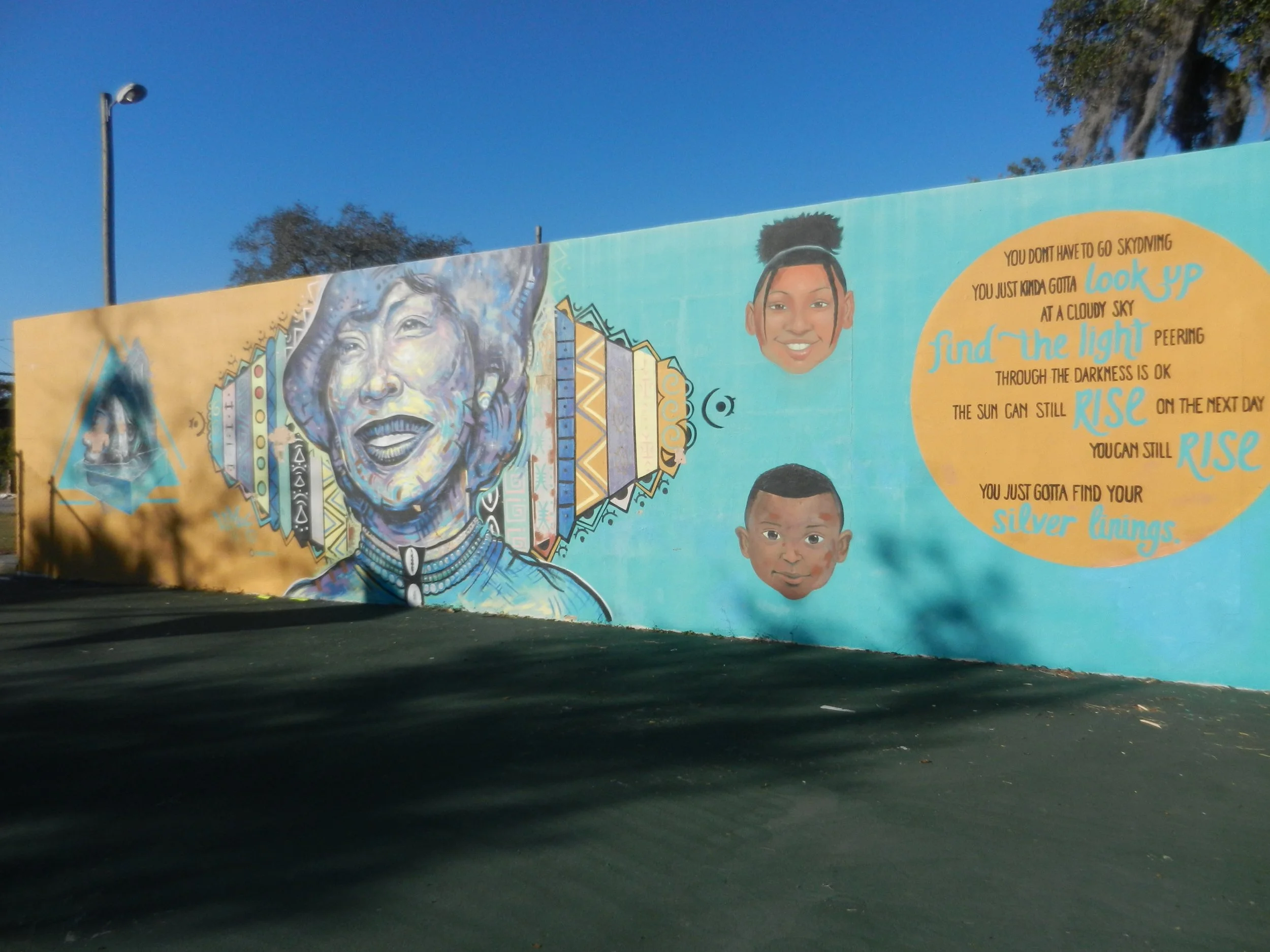
Rise Mural (Zora Side), Eatonville, FL
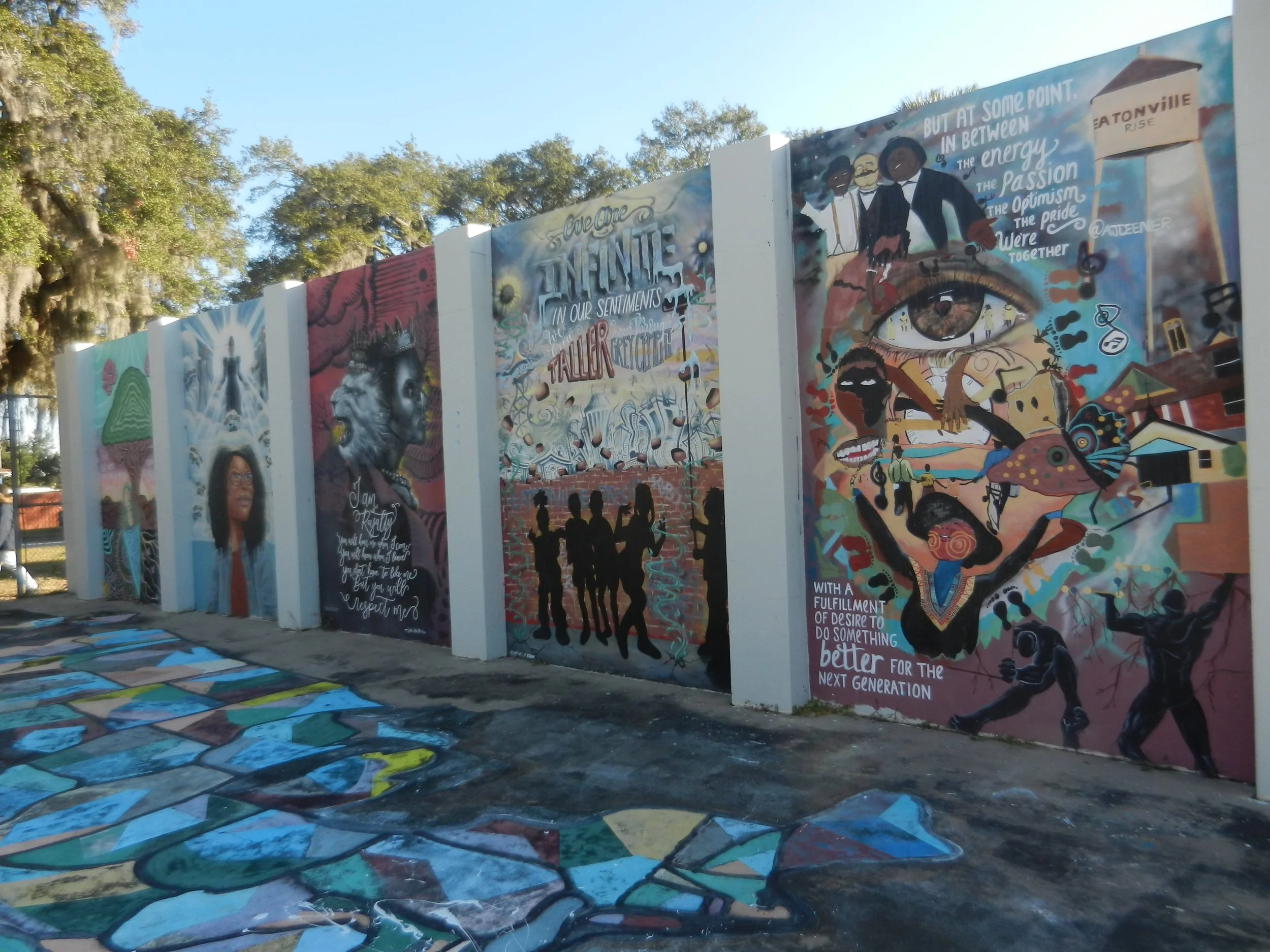
Rise Mural (back)
key takeaways:
Black laborers “rising and returning to the mist”
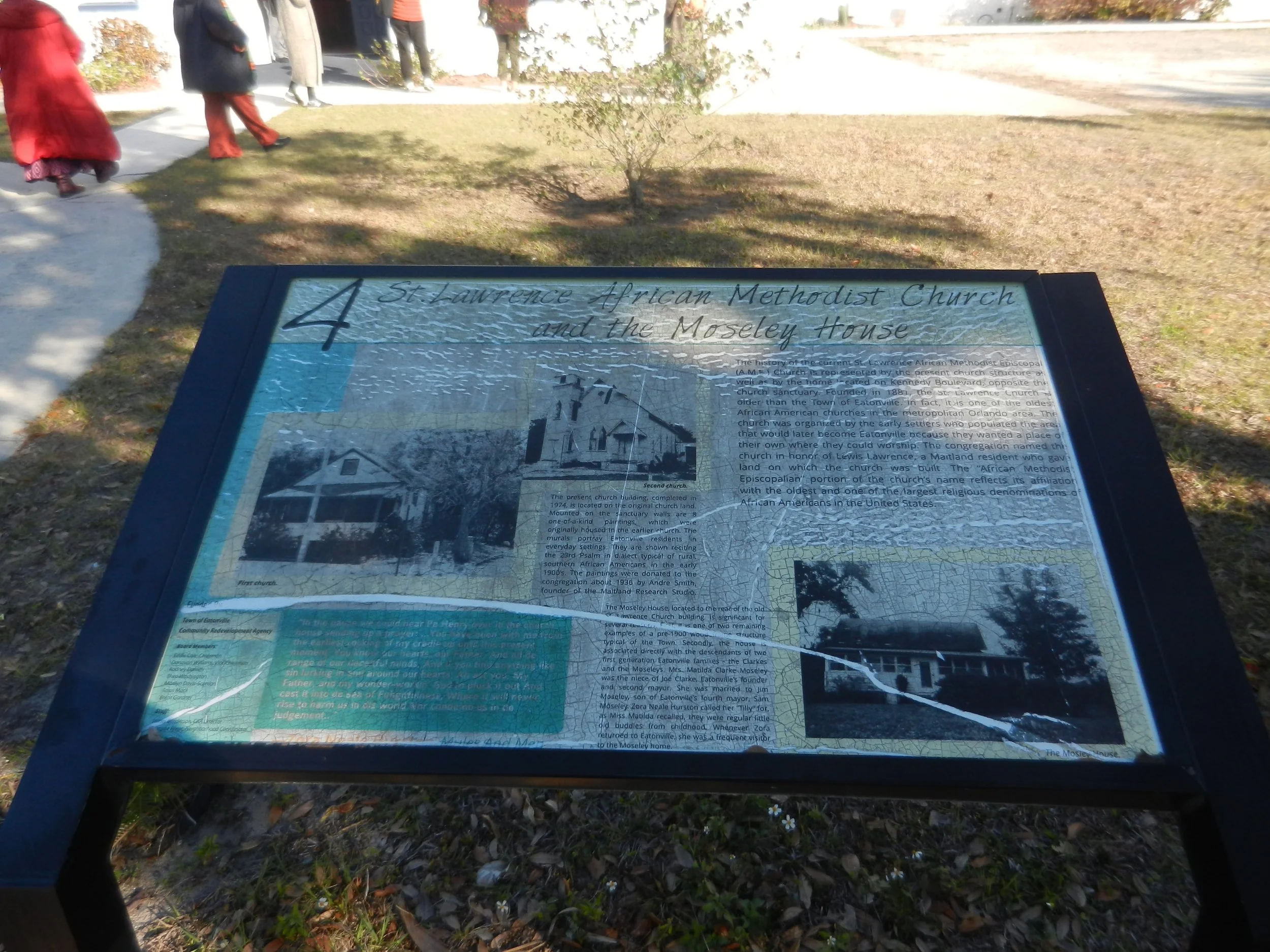
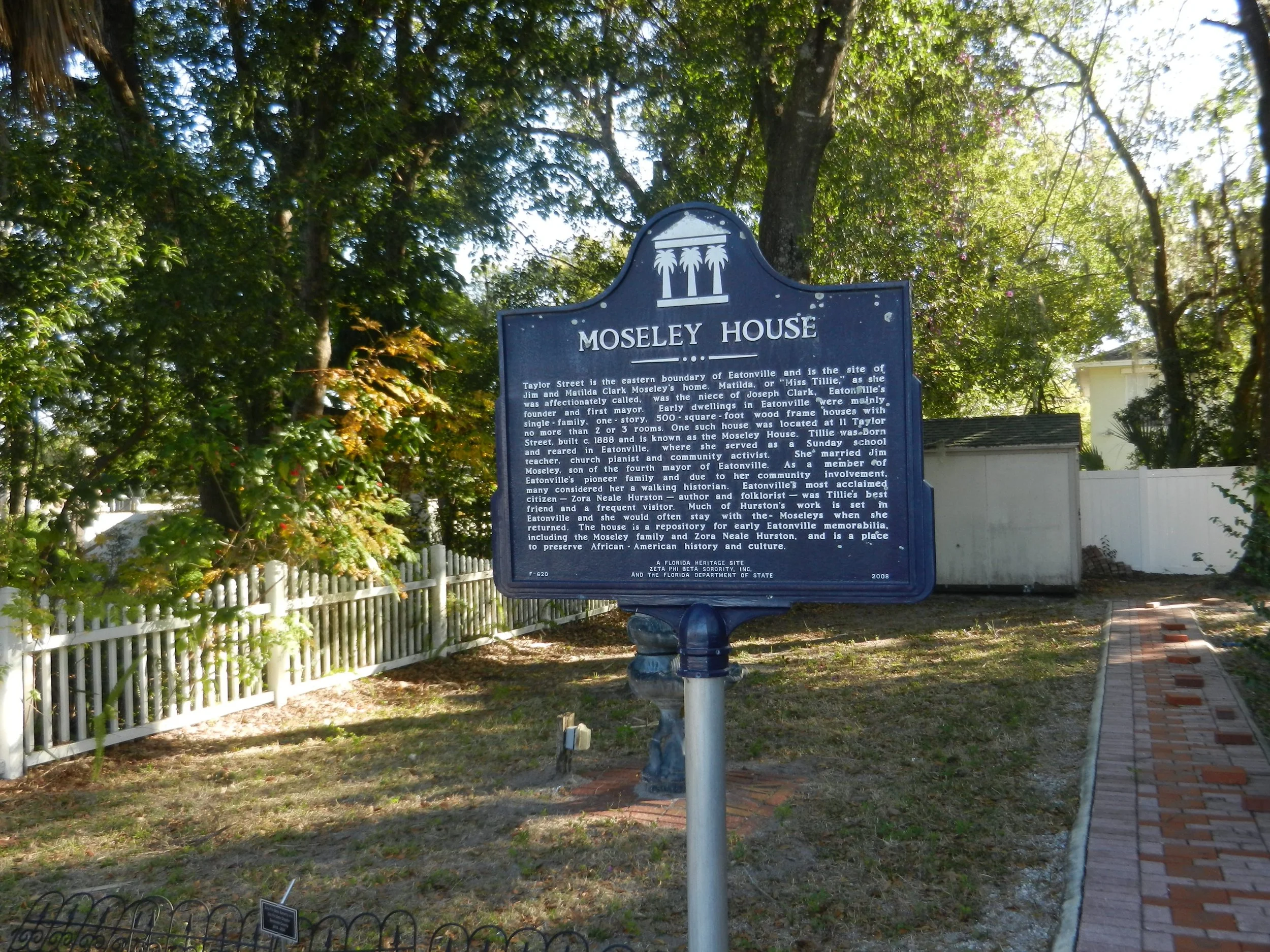
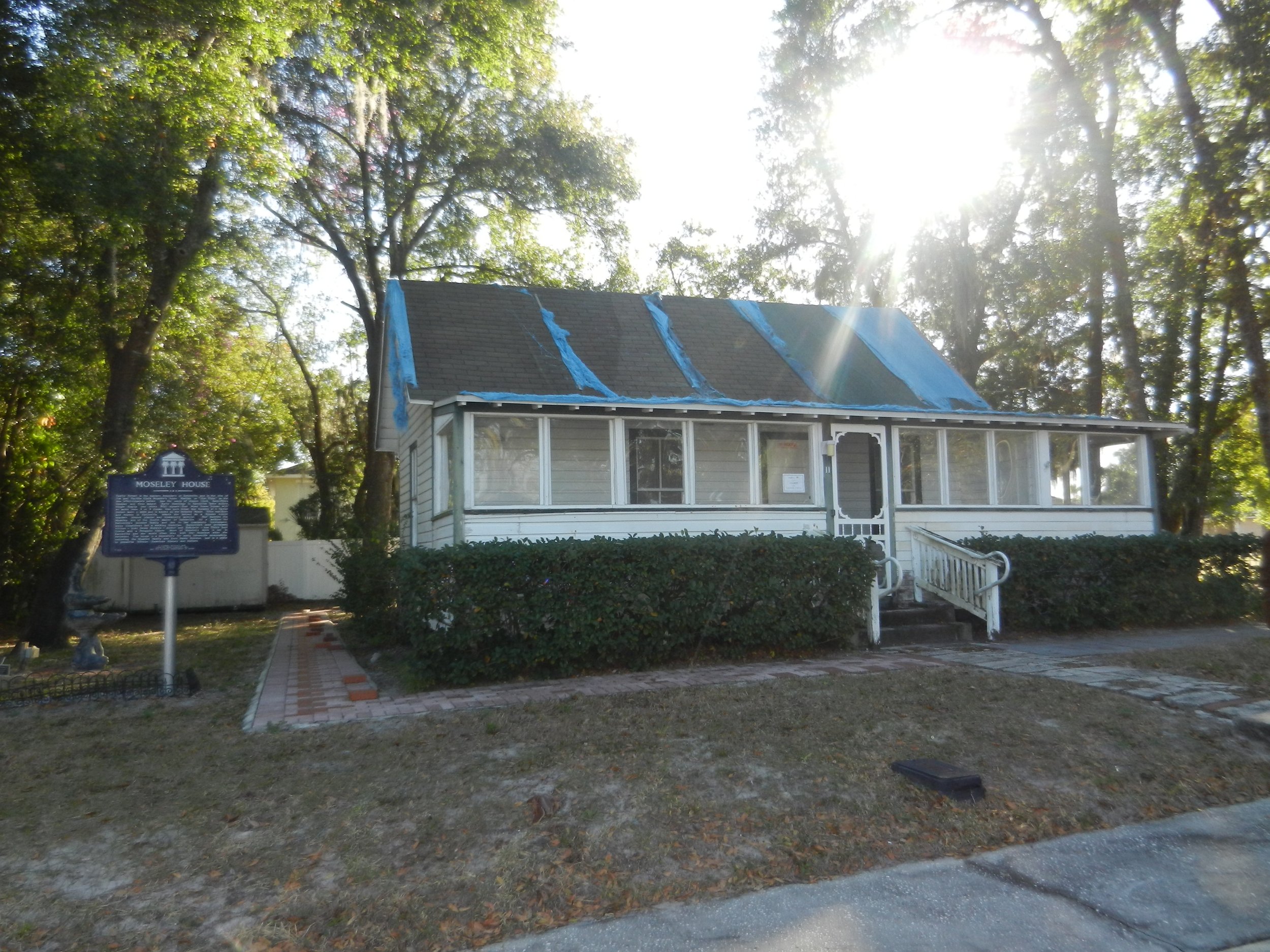
J. Andre Smith (Black Jesus murals) & Josiah Eaton (put the money up to found Eatonville)
what’s with all the white boys having Black names?
A.M.E.:
African, because of the Africans who sat in the “nigga pews”
Methodist, the denomination
Episcopal, the order of the bishop
“LIMITATIONS GIVE BIRTH TO CREATIVITY”- Trent Tomengo
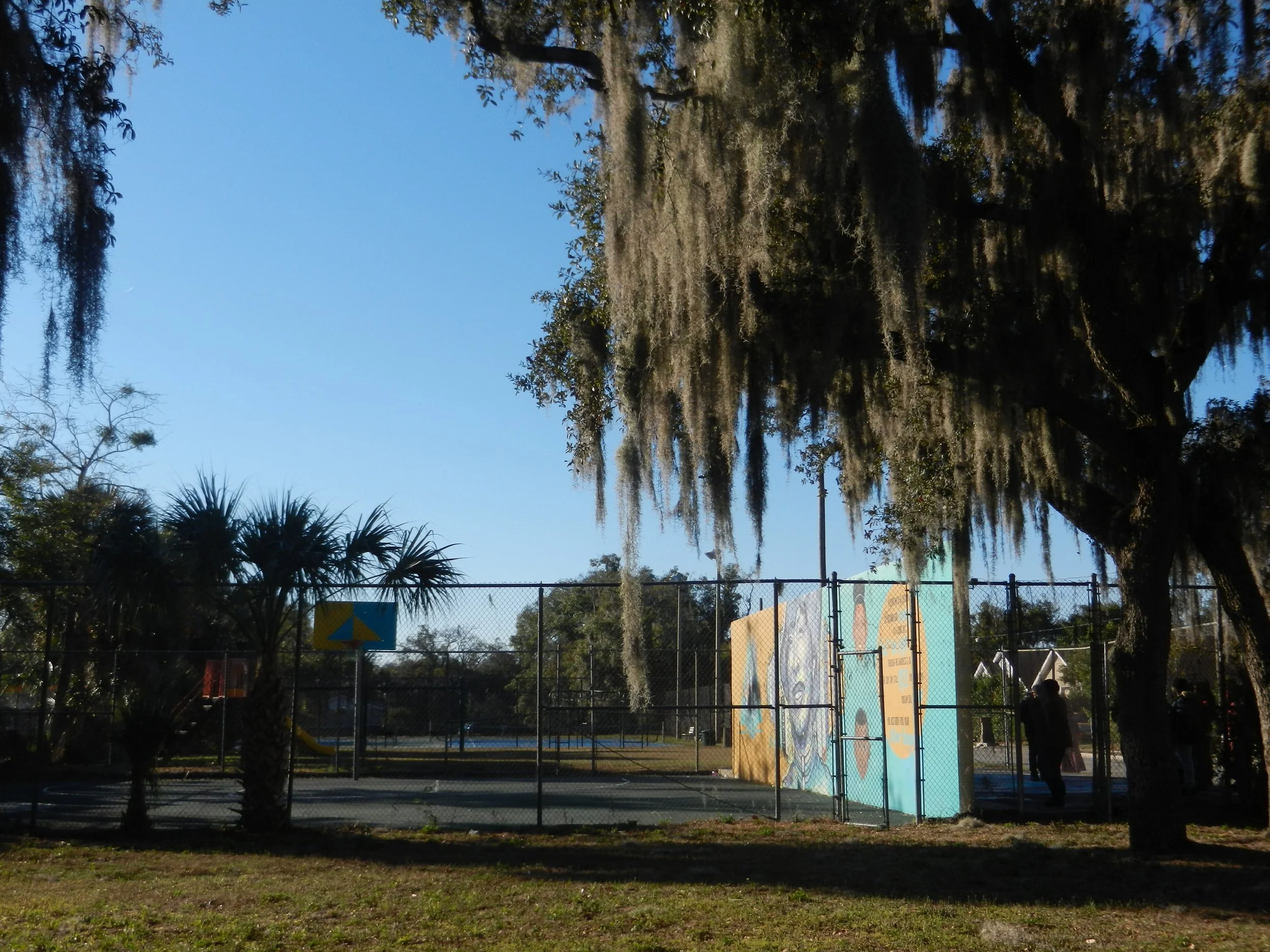
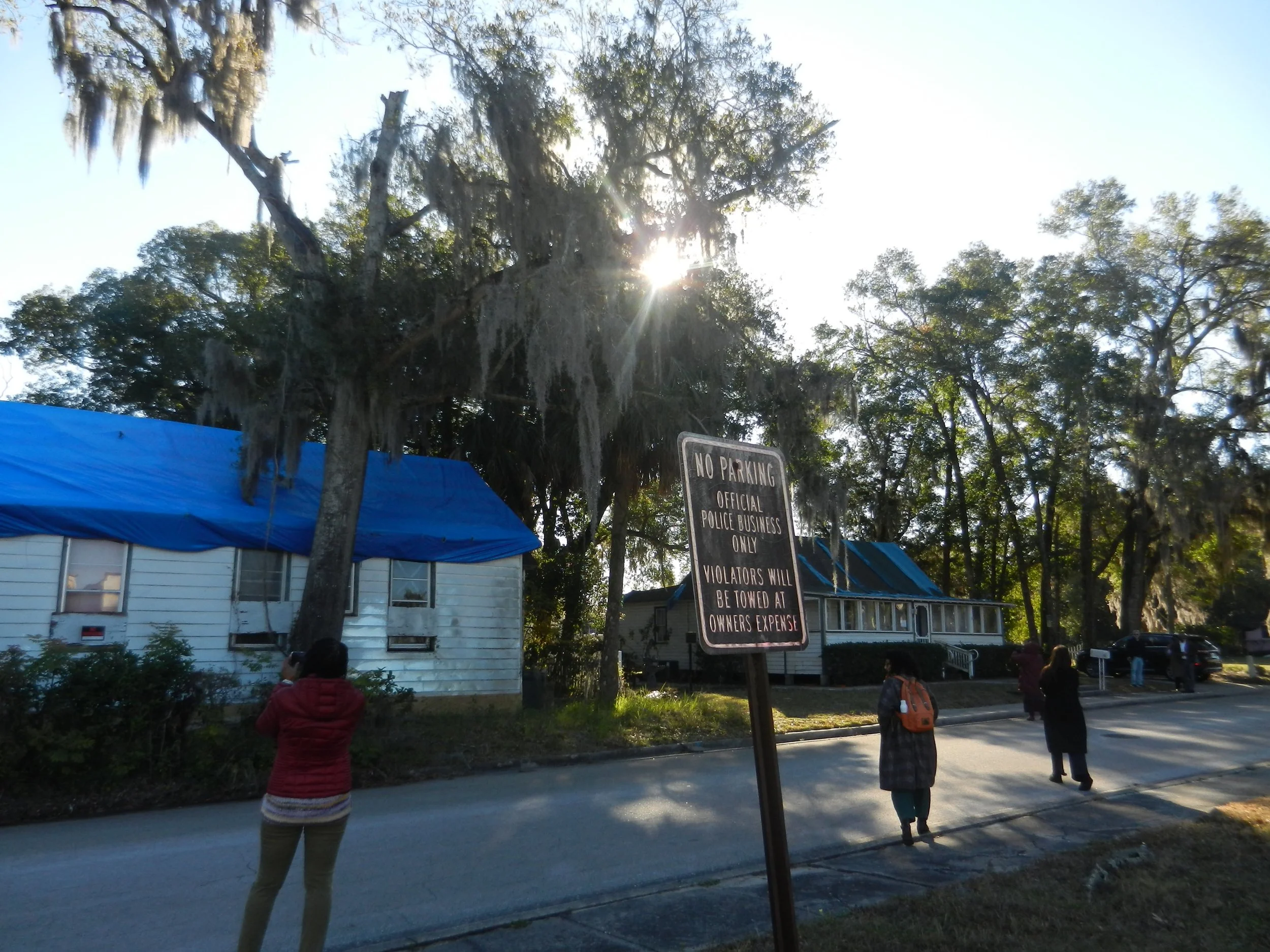
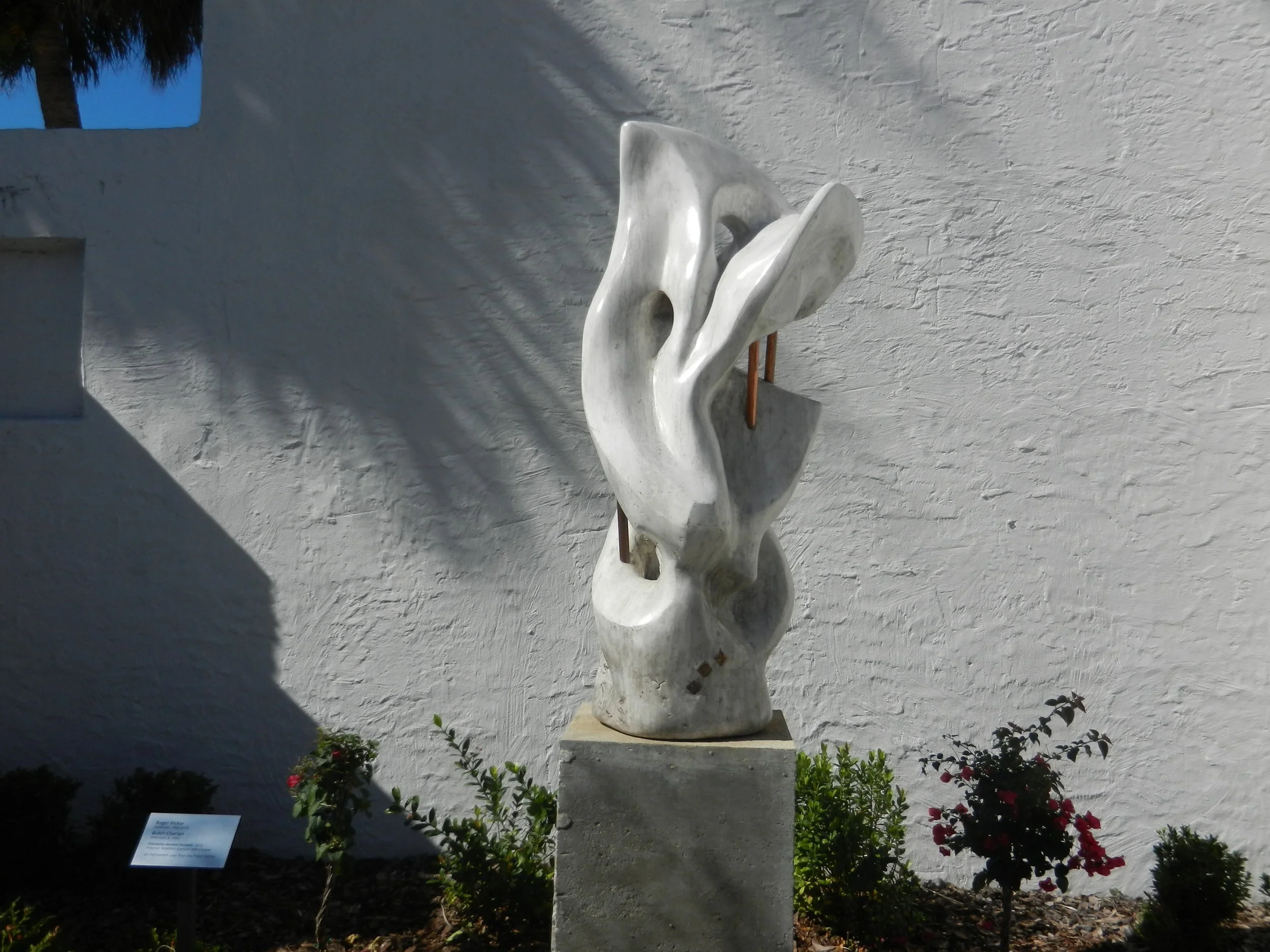
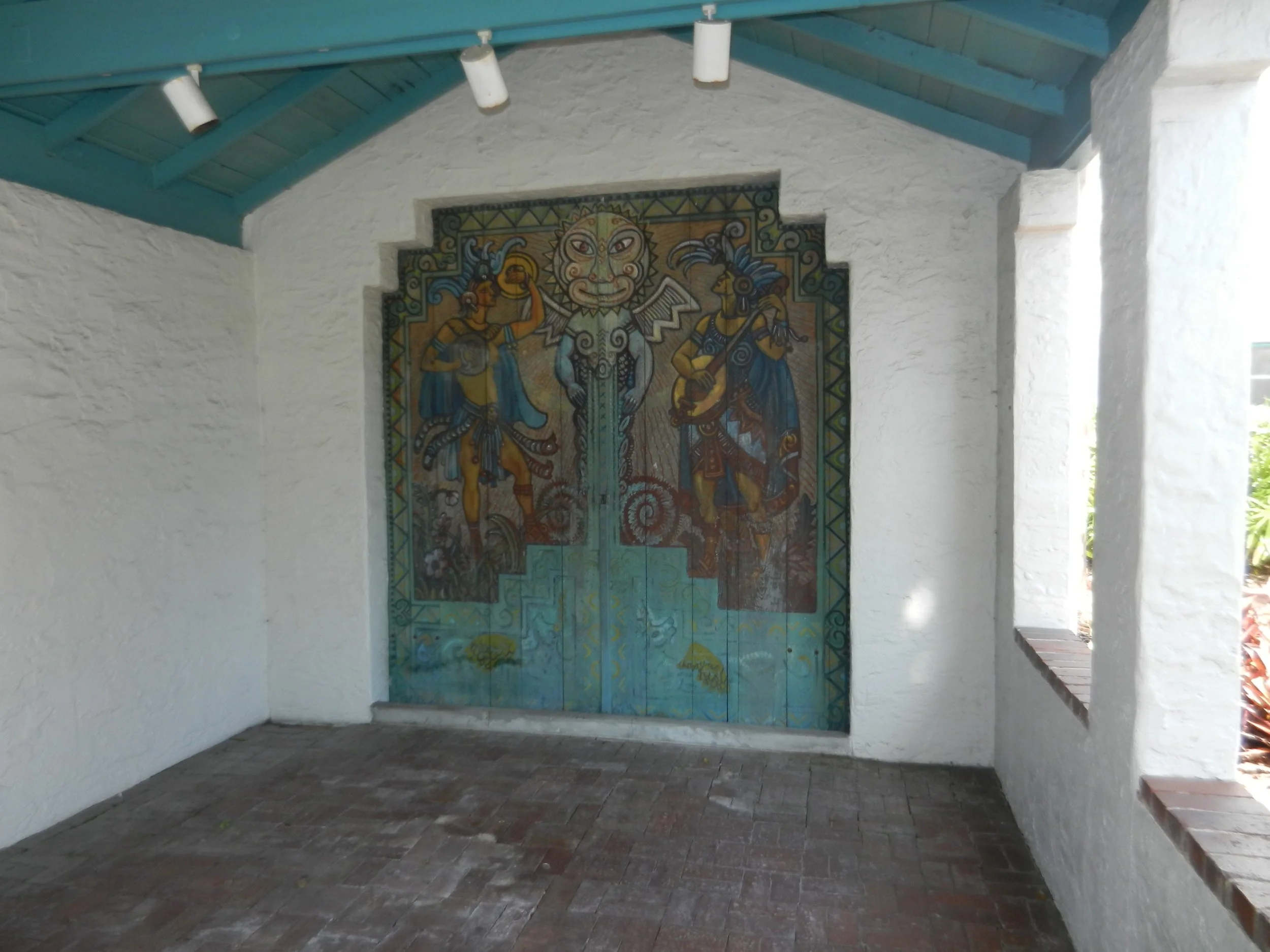
In the evening there was a presentation at Rollins College, ‘Vignettes from ‘Let My People Sing’’ a play the students created about Zora. No shade, it was… what it was lol. I know there are limitations to educational theatre, particularly at the undergraduate level and I’m always hesitant to truly critique these things because they’re essentially children, but really they aren’t to blame anyway. I blame the faculty. I blame the education system.
For some reason, especially in undergraduate productions people feel the need to make everything multicultural and “for all.” Though Zora’s academic life outside of Eatonville included white people, many of these were strictly essential relationships where Zora said and did whatever she needed to in an effort to get what she needed to survive. It was strange to watch young white girls cry about ‘Lift Every Voice and Sing’— for them to say they never saw the transformative value or power of performance until they were 18 on a PWI campus doing a student driven production about Zora Neale Hurston. It was actually kind of comical and… disrespectful? My existence has always been political. I’ve never known the art I created or participated in to be anything but that. Even in show choir, my existence was representation— it didn’t matter that we were singing a Disney medley.
Day 2
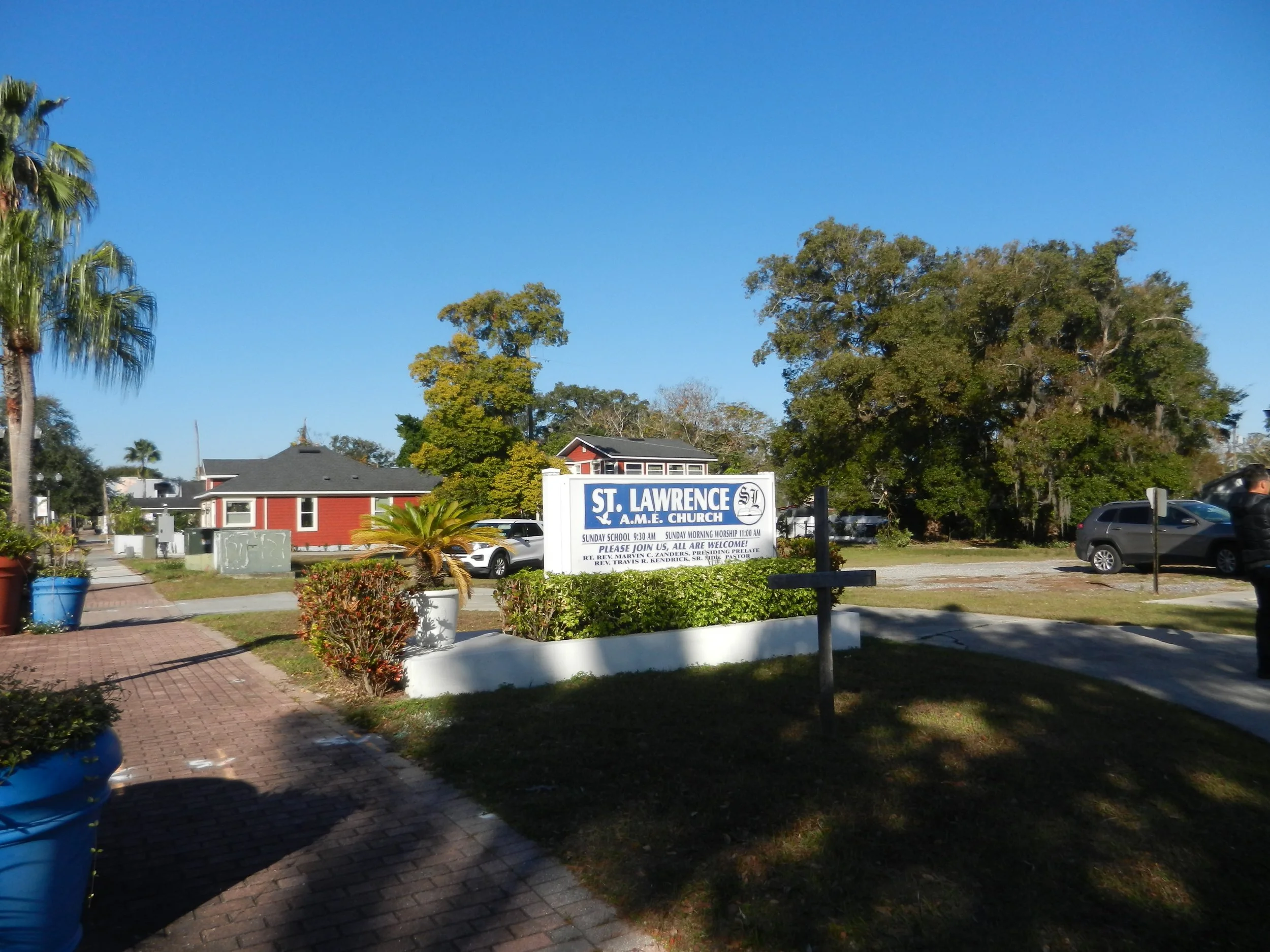
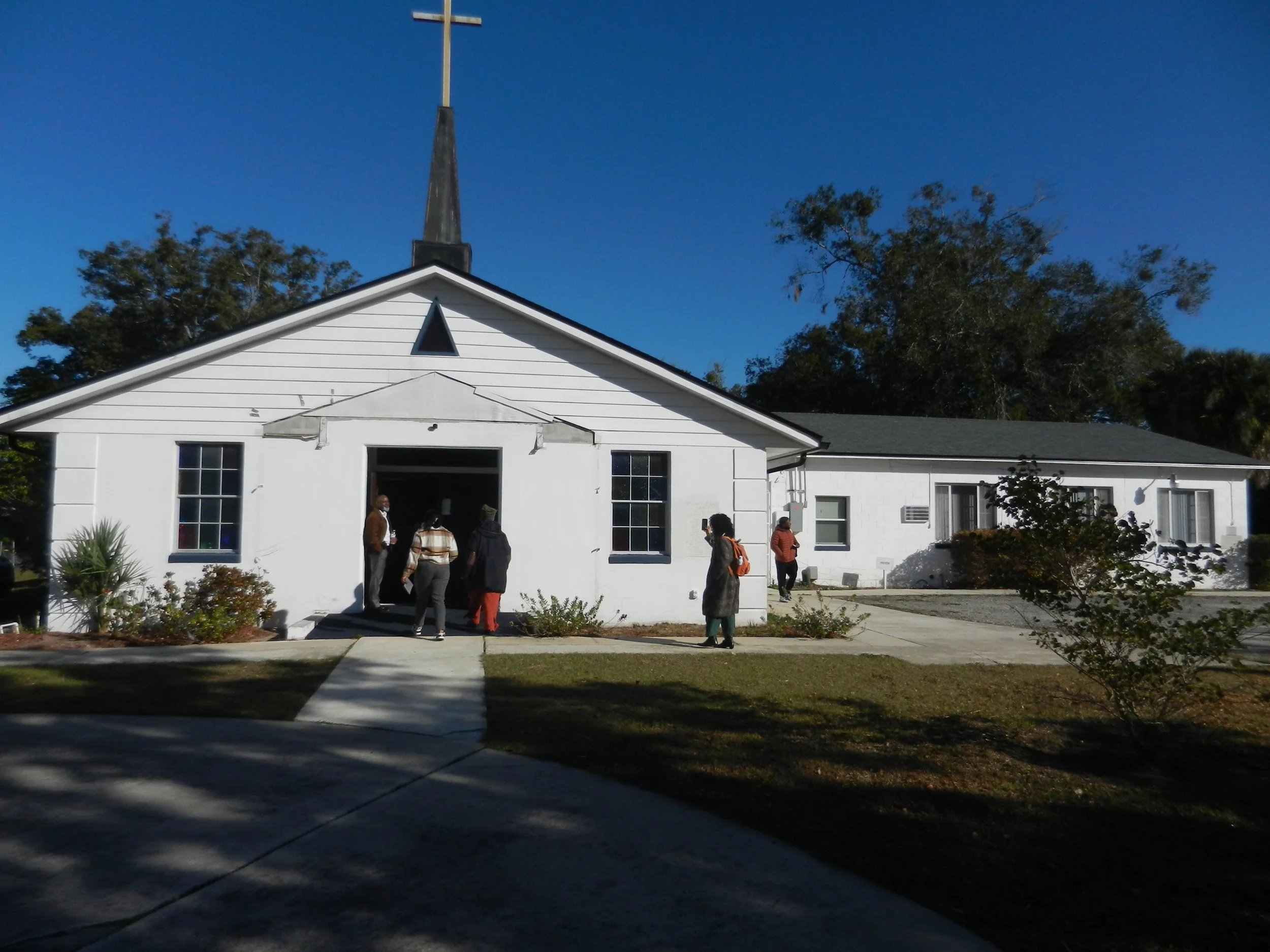
Day 2 was presentation day for me. I am extremely proud of what I accomplished and I feel like this presentation was even better than the last. I’m still working on pacing and lifting my head up but I think people still appreciated what I was able to share. The day began at St. Lawrence AME where we got to hear Dr.Ruthe T. Sheffey (in her 100th year!) speak about Zora and the festival and it reminded me so much of my grandmother. She told us the same story three times— like the exact same thing— in the way that only elderly people can. Grateful to have that experience.
Our moderator, Trent Tomengo called me Dr. Jefferies all morning. I told him I was not a doctor, but he insisted and I accepted it. Language is powerful. It was spoken (it is written).
During the Q&A portion of my session, we were asked how care shows up in our classrooms and I didn’t get a chance to answer so I’ll do it now:
I introduce myself: name, pronouns, and how I’m feeling. I tell my students that in order to work together, we must consider and respect each other. It is important that everyone knows where we’re starting— if I’m having a bad day, my students need to know that my behavior isn’t personal or about them, I’m just having a bad day. And vice versa. When my students talk over each other, I tell them that what they have to say is important and I can’t hear those important things if they’re all talking at once. I emphasize that I want to hear them. I model care, and I let them know that taking care of each other/considering each other is the first step to creating collaboratively.
reading list from “Zora for Kids: The Place of Hurston in Children’s Literature” by Kenneth Kidd (University of Florida):
The Brownies Book (W.E.B. DuBois)
‘Drenched in Light’ (1926)
‘Dust Tracks on the Road’ by Zora Neale Hurston
‘Lies and Other Tall Tales’ adapted and illustrated by Christopher Myers
Dr. Ibram Kendi: ‘Magnolia Flower’ and ‘The Making of Butterflies’
key takeaways:
Waadi Festival “Beautiful Feast of the Valley” (2055 - 1650 BCE)
connecting and honoring ancestors (remembrance)
ran several days in Kemet/Ancient Egypt
ancestral resurrection: calling a name 3x
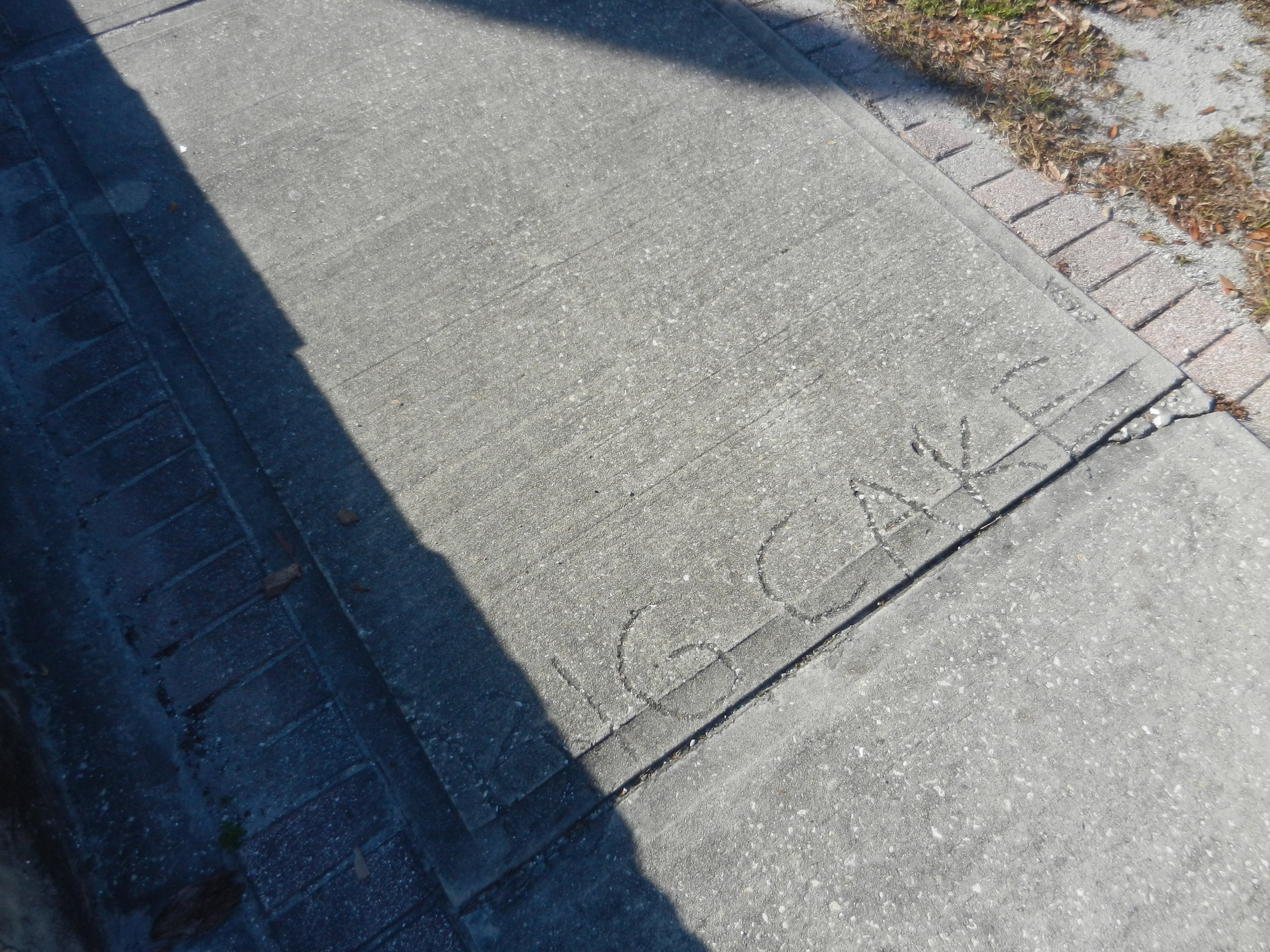
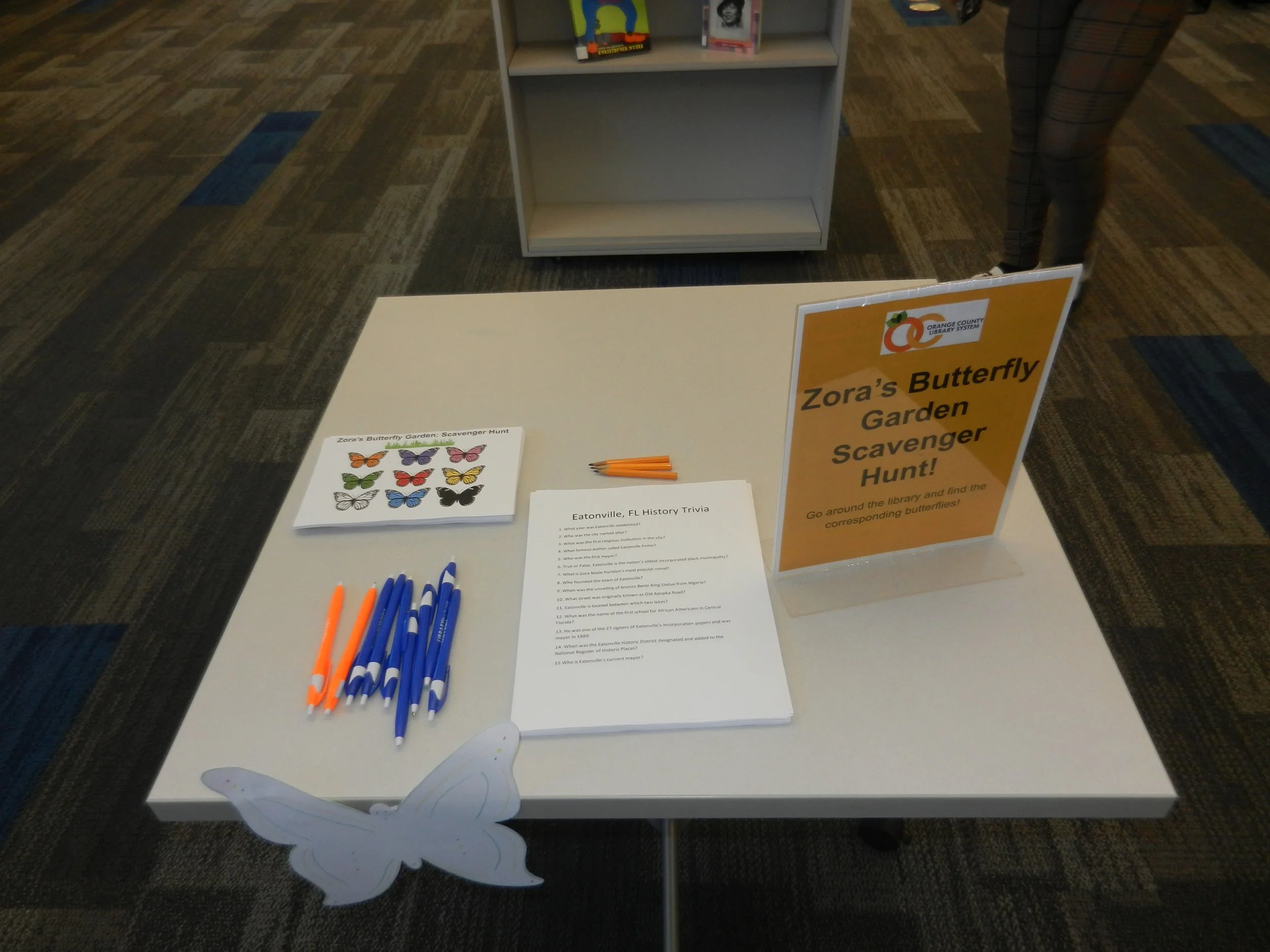
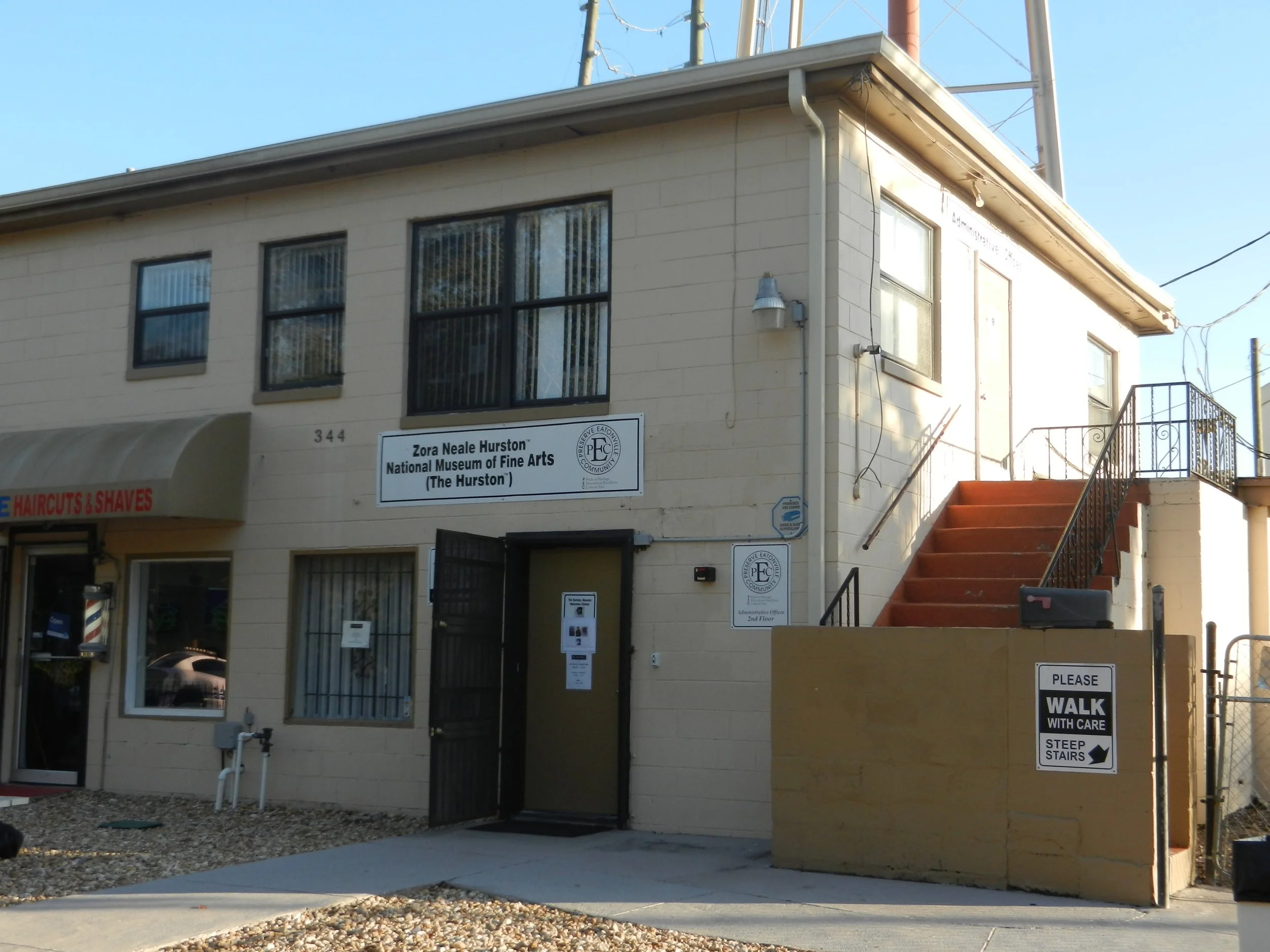
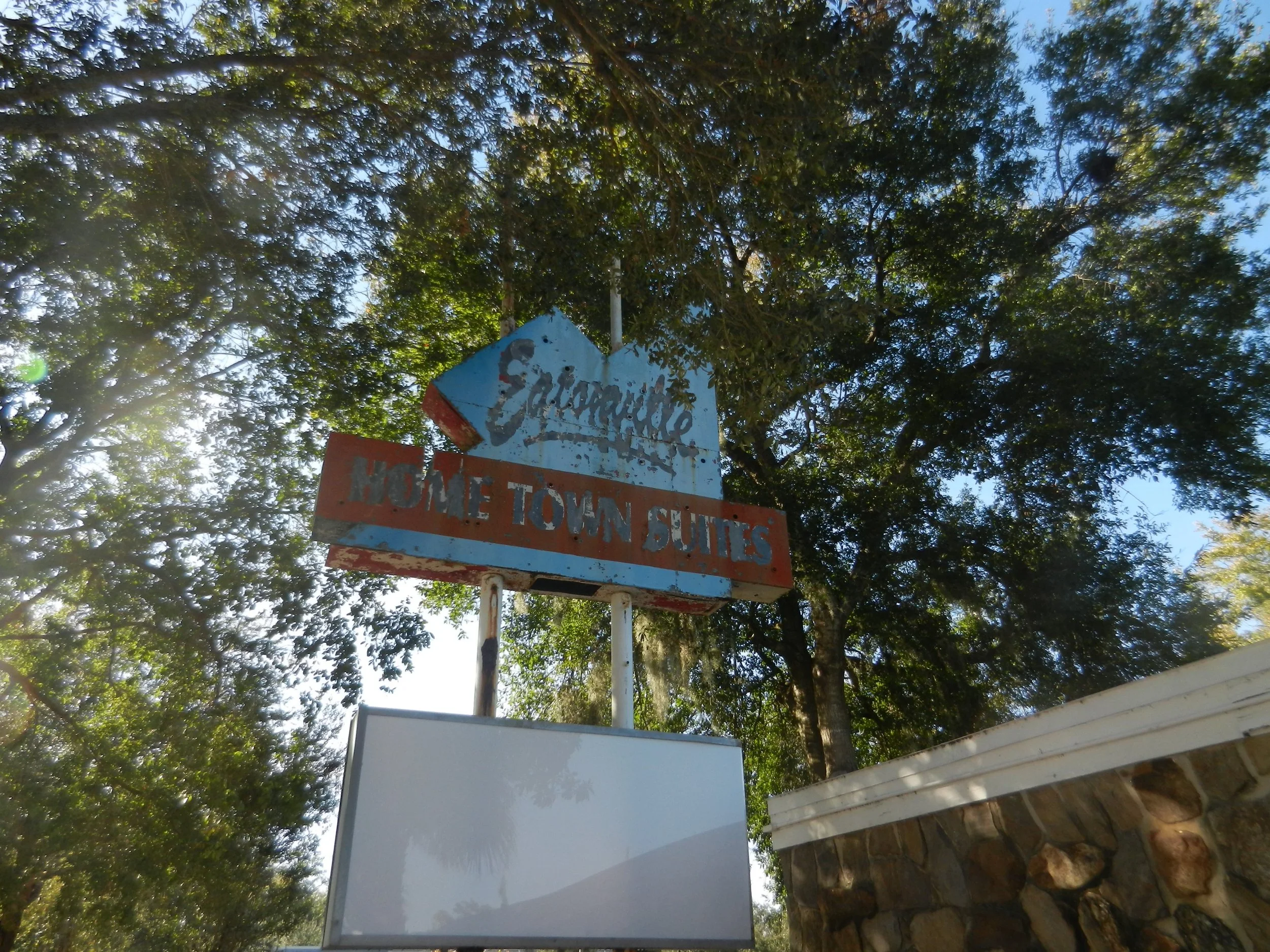
After those two sessions we hit the streets. We roamed Eatonville, did a scavenger hunt & trivia in the library, and then later we went out in DTO. I was hungover the next day so… you know it was a good time lol.
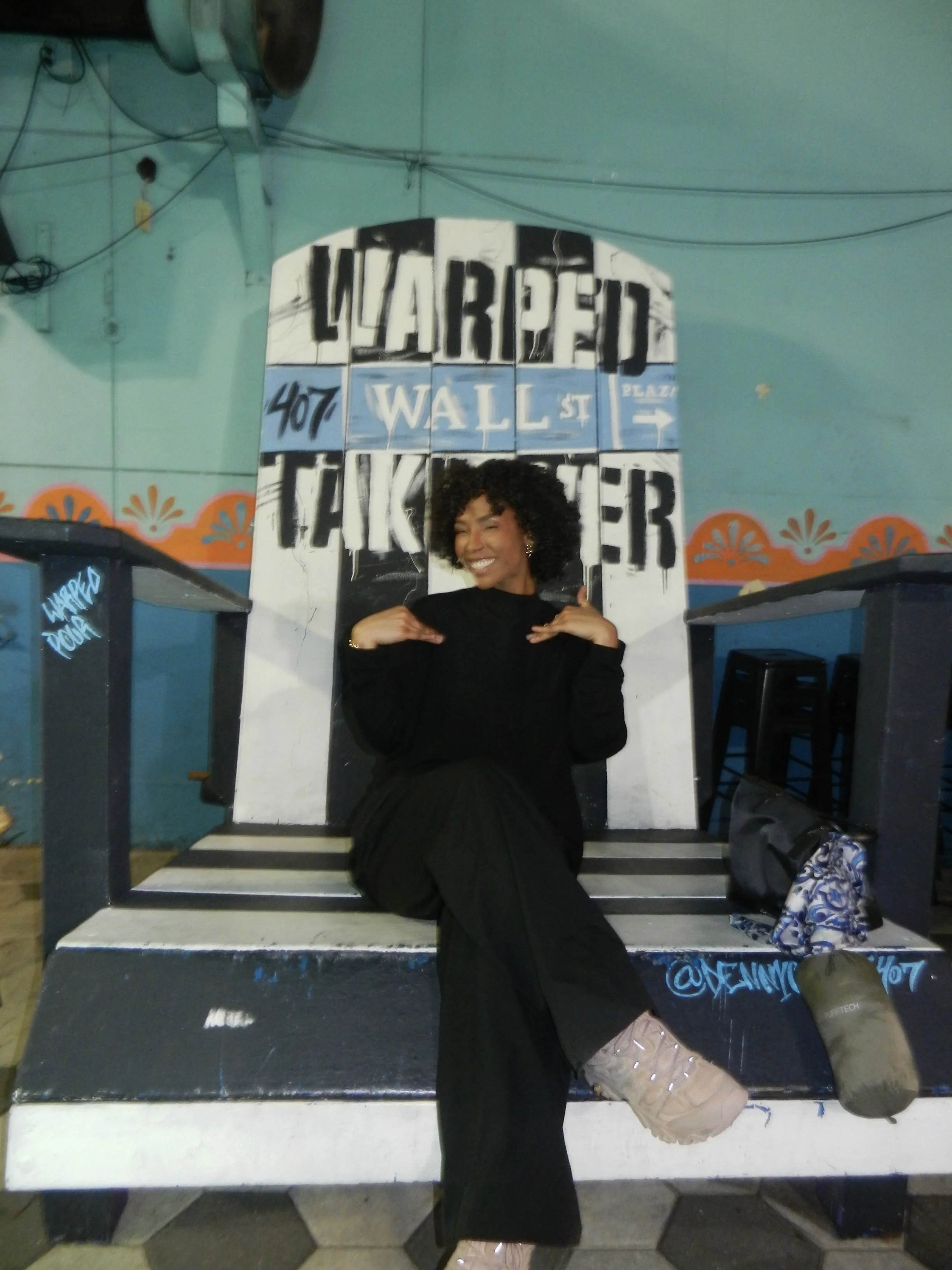
Care isn’t a concept but an embodied practice. It is in everything I do— in every interaction, every conversation. It is the worry before I speak/the worry after I speak/the consideration of my words.
Care is making a place for myself and for others.
As the world burns,
“as the grimy globe spins,”
I find solace in spaces like these— where we are valued, commemorated, defied and encouraged. I am so grateful to know Zora and truly honored to contribute to her legacy in this way.
Big Zor Zor the conduit you are! The force you are! I can only hope my archive will be as decadent.
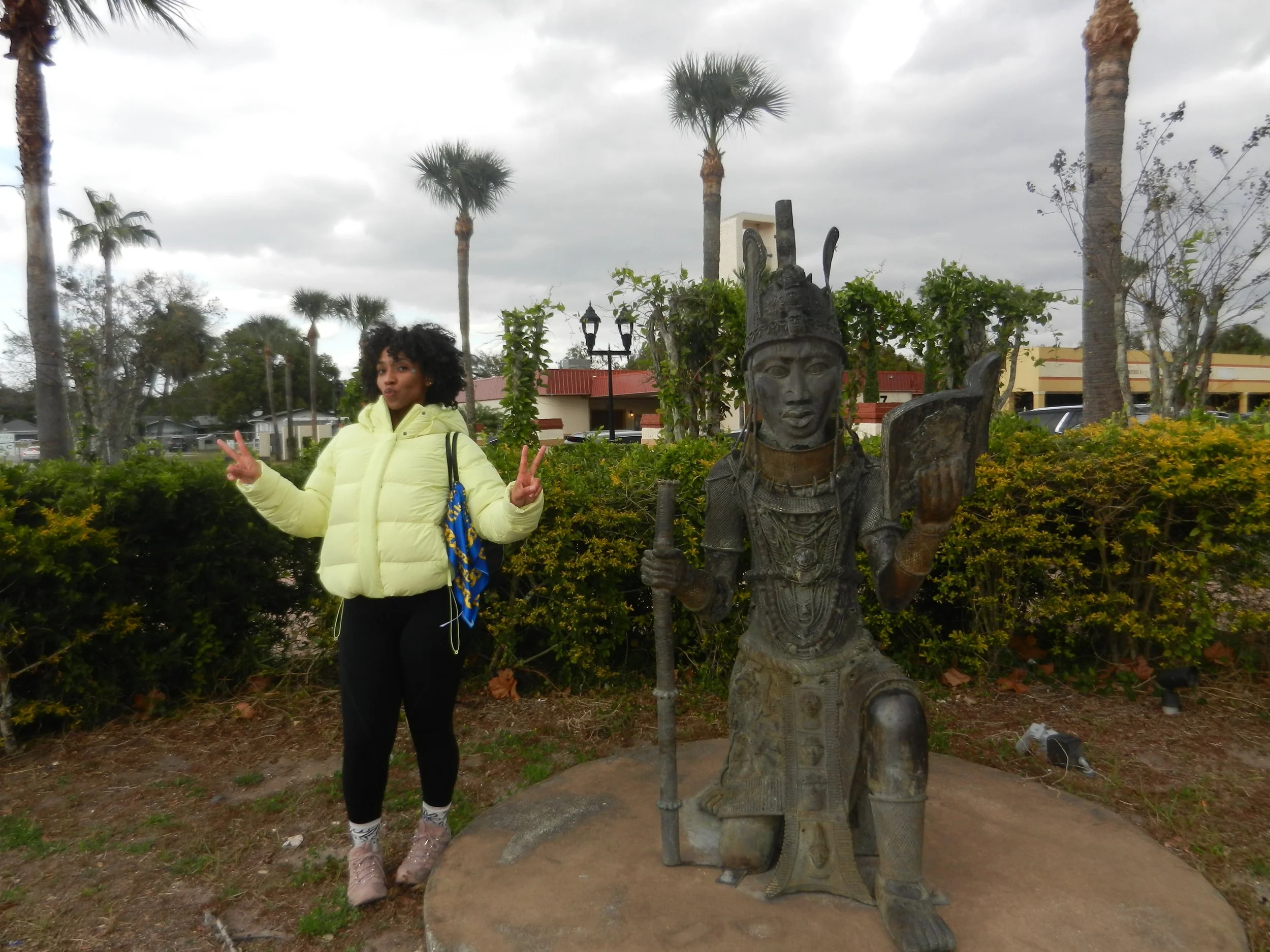
check out my presentation with a membership to theblackdramaschool.org
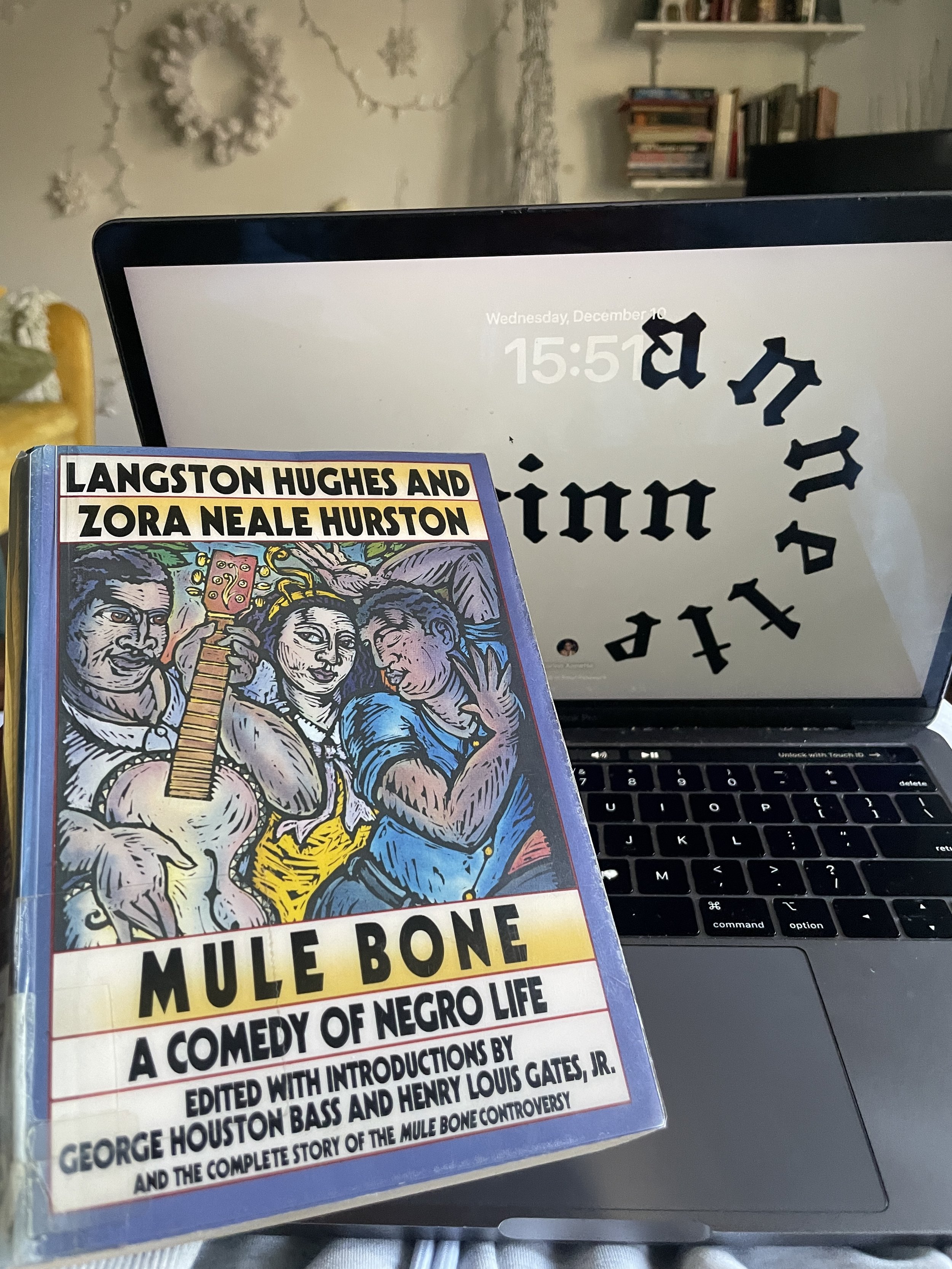
on ‘‘Mule Bone: A Comedy of Negro Life’ by Zora Neale Hurston and Langston Hughes and the complete story of the Mule Bone controversy’
edited with introductions by George Houston Bass and Henry Louis Gates, Jr.
‘Another Bone of Contention: Reclaiming Our Gift of Laughter’ by George Houston Bass
“In her writing of Afro-American folklore, Zora Neale Hurston has cited the art of laughter as one of black folks gifts to American culture.” (p1)
Hughes & Hurston used “the vernacular tradition” as the foundation for their drama
“Hughes and Hurston, in other words, were drawing upon the black vernacular tradition to “ground” their drama… but also to “extend” the vernacular itself.” (p20)
“The play’s effect depends largely on the devices of verbal improvisation— sounding, rhyming, woofing— that are centra to Afro-American folklore.” (p176)
“… Hurston and Hughes were attempting to dramatize the “oral-aural worldview” of a black community that contrasts with the typographic-chirographic structure of white middle-class thought. The contest is a ritual, designed to defuse the violence implicit in the conflict, to channel the aggression into mental rather than physical terms.” (p182)
LETTERS
Zora Neale Hurston in a letter to Langston Hughes, January 20, 1931 (p223)
“P.S. How dare you use the word “nigger” to me. You know I don’t use such a nasty word. I’m a refined lady and such a word simply upsets my conglomeration. Whaat do you think I was doing Washington all that time if not getting cultured. I got my foot in society just as well as the rest. Treat me refined.”
Zora Neale Hurston in a letter to Charlotte van der Veer Quick Mason, January 20, 1931 (p226):
“ I wish it were possible for Locke to get him before you and then call me in and et him state his claims.
But my nigger mess aside, I hope that you are well as can be expected and that your dear C. is the same.”
Carl Van Vechten in a letter to Langston Hughes, August 17, 1942 (p279):
“In many ways a vivid and extraordinary story… I’ve also been reading many Negro letters for Yale, including the correspondence re Mule Bone which includes letters from YOU and Zora and Barrett H. Clark and Lawrence Langner and Theresa Helburn. It’s a pretty complete tae and your letter regarding Zora’s tantrum in your mother’s room in Cleveland is wonderful. She had a tantrum in my library at 150 West 55 Street too and threw herself on the floor and screamed and yelled! Bit the dust in fact. You woulda loved it, had it no concerned you…”
I love the way people talk about Zora— how excited they are to speak about her (good or bad).
READING LIST:
Du Bois, W.E.B. “Can the Negro Save the Drama?” Theatre Magazine XXXVIII (July 1923): 12, 68
Van Vechten, Carl “Nigger Heaven”